
Aerobiology
What Is Aerobiology?
Aerobiology is the study of biological particles in the atmosphere, known collectively as bioaerosols, that occur both outdoors and indoors. These include pollen and fungal spores, but also bacteria, viruses, protozoa, and fragments of biological material that can act as carriers of disease for humans, animals, and plants.
This field examines the sources, emission, transport, and effects of these particles on human health and the environment. Aerobiology is inherently interdisciplinary, combining insights from biology, meteorology, climatology, physics, and medicine.
A major focus of aerobiology lies in understanding seasonal, weather-, and climate-dependent allergies, particularly those caused by pollen and spores. In Switzerland, this field has long been closely linked to allergology, but also to atmospheric sciences and environmental health.
The factsheet “Pollen allergy and the impact of a changing climate” by the Swiss Academy of Scienses (SCNAT) summarises the latest findings about the hay fever and pollen situation, and how it is being impacted by climate change.
Allergies and Human Health
Allergies are immune-mediated diseases that occur when the body reacts abnormally to otherwise harmless substances, known as allergens. An atopic individual is someone who has developed or is genetically predisposed to such reactions.
Each allergic person has an individual sensitivity spectrum, the set of allergens they react to, and these thresholds are not constant. Sensitivity changes dynamically with various protective and adaptive factors in the body, especially in the respiratory and digestive systems.
Aerobiological knowledge is essential in allergy treatment, since cross-sensitizations between different types of pollen can trigger diverse symptoms. For example, the same sensitization may cause respiratory allergies during pollen season and digestive symptoms at other times.
aha! Swiss Allergy Centre provides comprehensive information and guidance about allergies and allergens to help those affected achieve a better quality of life.
The Role of Weather and Climate
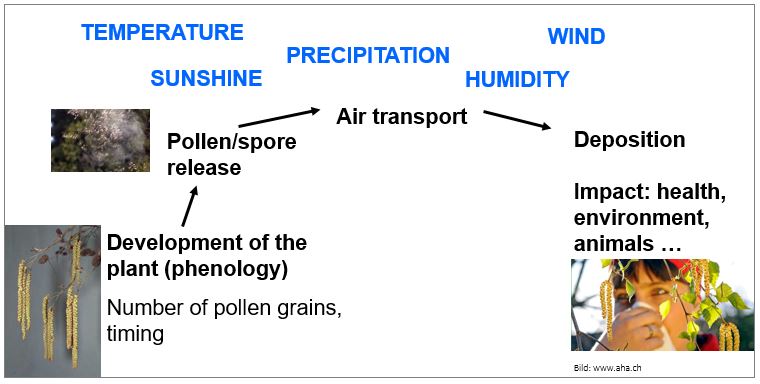
Weather and climate are the most important factors, which influence the aerobiological cycle from release to transport and deposition of pollen grains.
- Climate refers to long-term atmospheric patterns that determine the living conditions for plants,
animals, and humans. It defines the environmental framework for the presence and reproduction of organisms.
Weather describes short-term atmospheric changes, such as wind, humidity, and temperature, which control the immediate dispersion of bioaerosols.
For example, light winds (below 1 m/s) favor local fertilization of wind-pollinated plants, while stronger vertical air movements transport particles such as volcanic ash, Sahara dust, or pollen over long distances. Understanding these processes is key for allergy forecasts and environmental monitoring.
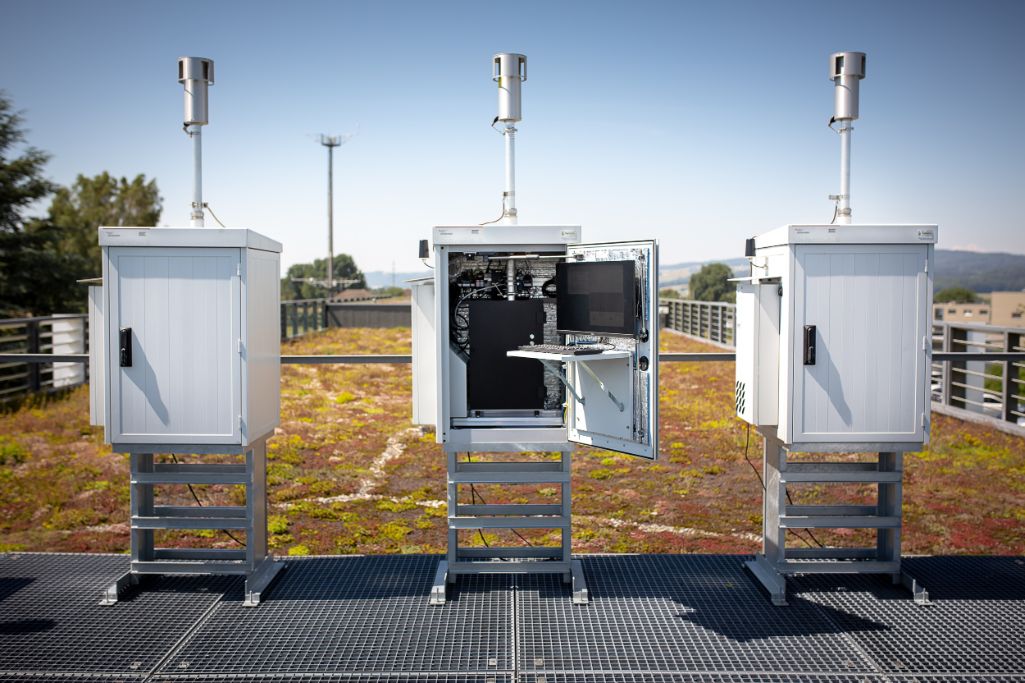
Pollen measuring site in Payerne. Picture: Gian Lieberherr / MeteoSwiss
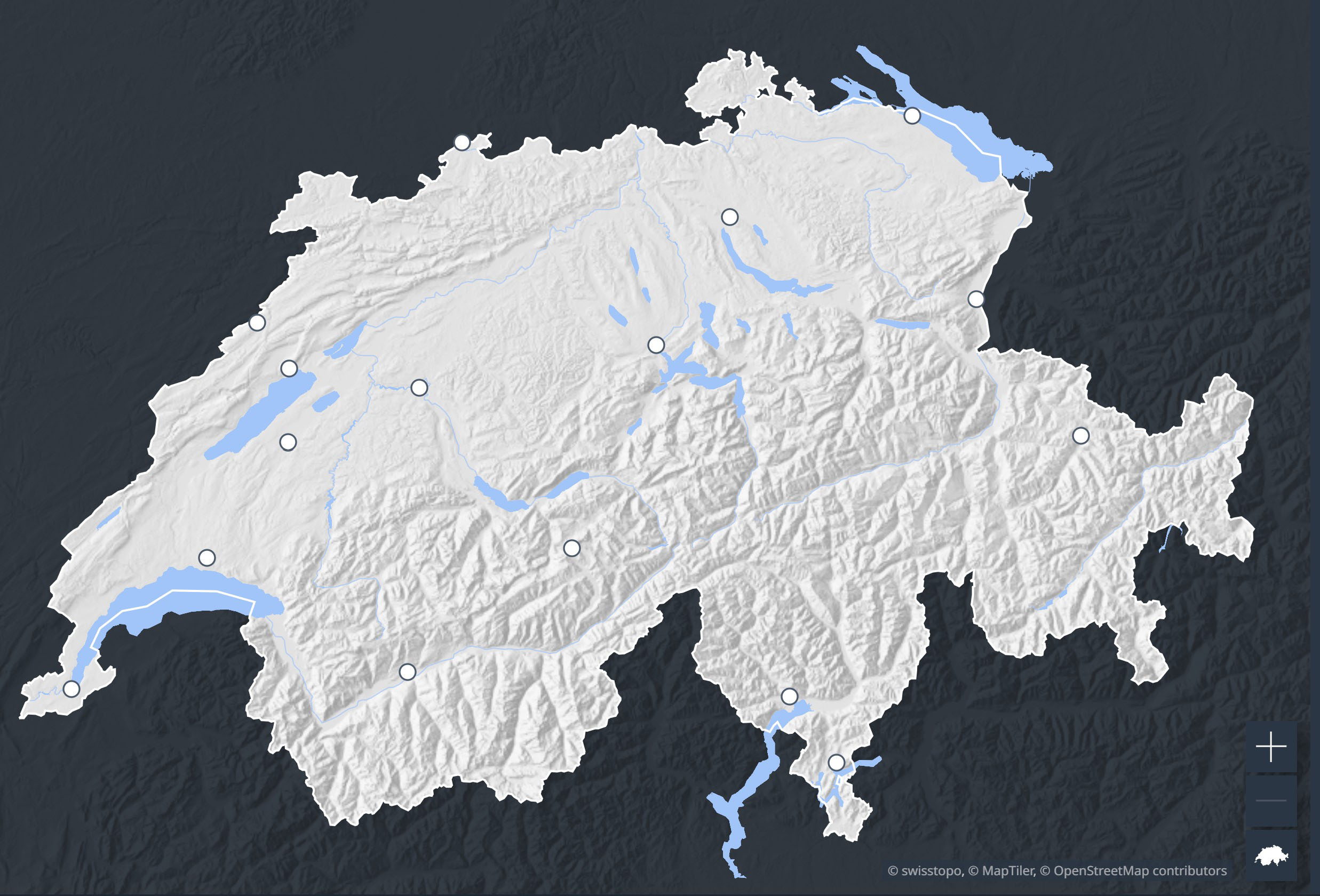
Map of the Swiss Pollen network “SwissPollen”
Aerobiology in Switzerland: The National Pollen Network
MeteoSwiss operates the national pollen network. Since the year 2023, the new automatic pollen monitors are in operation and deliver real-time pollen data in an hourly resolution. Thanks to these real-time measurements, forecasts of pollen levels can be greatly improved and allergy sufferers can better plan their activities and medication. Real-time and hourly data allow for a better understanding of allergic reactions in relation to pollen exposure. Switzerland is the first country in the world to be equipped with such a national network for automatic pollen measurement.
Real-time pollen data and pollen information are available from:
- MeteoSwiss:
German: Real-time data, pollen forecasts, pollen calendars, season overview
French: Real-time data, pollen forecasts, pollen calendars, season overview - aha! Allergiezentrum Schweiz:
pollenundallergie.ch / pollenetallergie.ch and Pollen News App